







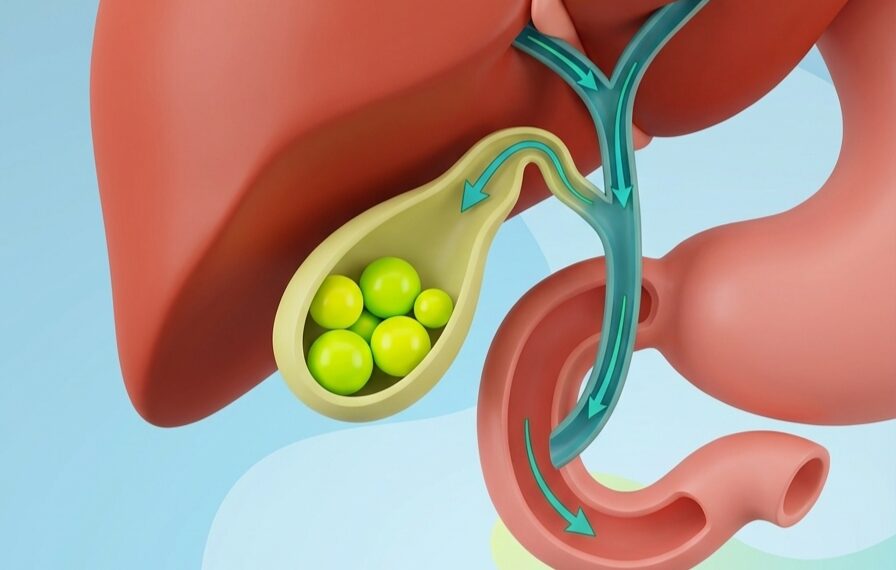

From Stone to Stone, the Gallbladder Calls for Help
Find out why gallstones form, which habits increase the risk and how to prevent discomfort from becoming an emergency.
The gallbladder is a discreet organ in our body: it works behind the scenes, it doesn't show up much and, when everything is going well, you don't even remember it's there. But all it takes is a greasy dinner or the silent accumulation of stones for this little organ - hidden just below the liver - to show signs of life. That's when the pain, discomfort and inflammation that surprise many people begin.
Understanding how the gallbladder works - and why stones appear - is the first step towards taking better care of your own health before your body has to scream for help. Let's break it down.
What are gallstones?
Gallstones, or "stones in the gallbladder", are crystals that form when there are imbalances in the composition of bile. Most of the time, in around 80% of cases, these stones are made up of cholesterol that has solidified inside the gallbladder.
Gallstones can remain silent (asymptomatic) for years or cause a real upheaval in the body. Among the main consequences, they can
- trigger sudden and intense pain, known as biliary colic;
- inflame the gallbladder, possibly leading to cholecystitis;
- obstruct important ducts, which can result in pancreatitis or serious infections.
How to recognize the symptoms of gallstones?
Biliary colic has very distinctive characteristics. The pain is common:
- appear in the upper right part of the abdomen;
- radiating to the back or rib region;
- appear right after meals, especially when there is an excessive consumption of fat;
- accompanied by other symptoms such as nausea, vomiting and, in some cases, fever.
Risk factors that favor the formation of gallstones
Gallstones develop when various factors combine to alter the composition of bile, making it more prone to forming crystals. Among the main reasons are our own habits: diets too rich in fats and refined carbohydrates, low fiber intake and a sedentary routine, factors that favor an increase in cholesterol levels in the bile and leave the gallbladder working less than it should. Even losing weight too quickly or fasting for long periods can contribute, as the gallbladder contracts less.
Some health conditions also increase the risk, such as obesity, diabetes and changes in fat metabolism. Hormones play an important role in this process, especially estrogen, which increases the liver's production of cholesterol and reduces the amount of bile acids. This helps to explain why women, especially those of childbearing age, who are pregnant or using contraceptives containing oestrogen, are more likely to develop gallstones.
Genetics also plays a role: around 30% of cases have some hereditary component. In addition, the lower contraction capacity of the gallbladder completes this set of influences which, when added together, make it easier for the stones to appear.
Smoking and high blood pressure are not classic risk factors. However, recent studies show that they are associated risk factors, since the presence of tobacco is correlated with the formation of stones and hypertension with metabolic imbalance.
Gallstones vs. kidney stones: what's the difference?
Although both are called "stones", they are not the same thing.
| Gallstones (Gallbladder) | Renal Calculi (Kidneys) |
| It forms in the gallbladder or bile ducts | It forms in the kidneys or urinary tract |
| Made of cholesterol and bile salts | Made from crystallized minerals |
| Pain in the upper right side of the abdomen | Generates intense back pain that radiates to the groin |
| The pain usually appears after meals | Pain can occur at any time |
| Prevention: adopting a balanced diet | Prevention: intense hydration |
How can gallstones be prevented?
The good news is that several simple day-to-day habits help - a lot - to reduce the risk of gallstones forming. Among the main strategies are:
- maintain a balanced diet, rich in fiber and lower in fat;
- practicing physical activity regularly;
- avoid smoking;
- maintain a stable and healthy body weight.
Cholesterol is directly related to both the formation of gallstones and the general health of the body. Want to delve deeper into the topic? See also: What you need to know about cholesterol levels.
The gallbladder plays an important role in digesting fats and balancing the body. That's why understanding how gallstones arise, recognizing the symptoms and knowing how to prevent them is fundamental to maintaining good digestive health.
If you've been experiencing frequent abdominal pain or notice other signs that raise suspicions, it's best to go to a health professional for a proper assessment.
Source:
https://www.ncbi.nlm.nih.gov/books/NBK459370/
https://aps-repo.bvs.br/aps/qual-a-diferenca-entre-calculo-renal-e-biliar/
https://bvsms.saude.gov.br/pedra-na-vesicula-calculo-biliar/