







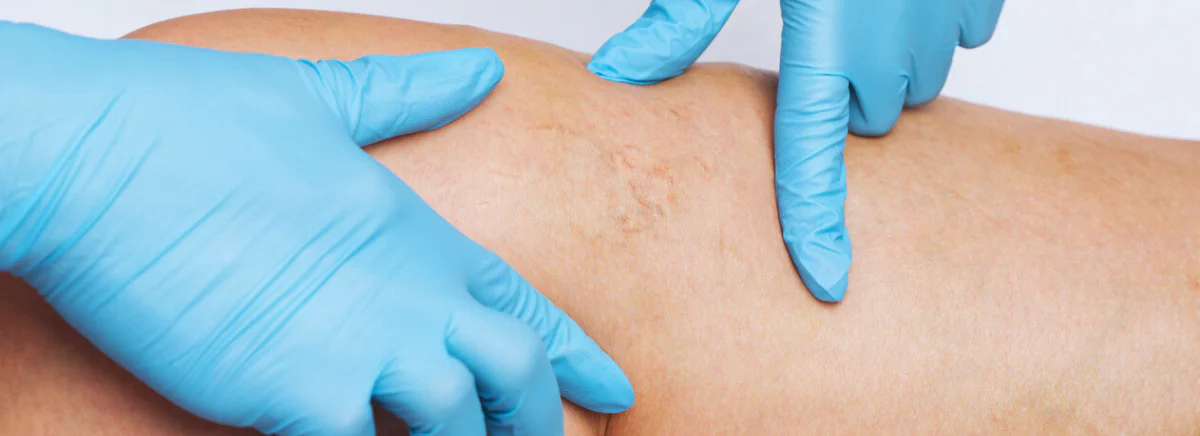

Varicose veins: don't tie your circulation in knots. Follow our tips!
Did you know that the complete passage of blood through the arteries (from the heart to the smaller vessels) is responsible for maintaining the proper functioning of our body's circulatory system?
To understand this better: when this flow of blood is reduced or prevented from flowing to a specific part of the body - usually due to narrowing or closure of the arteries - what we call poor circulation problems occur, such as the appearance of varicose veins.
According to data from the Brazilian Society of Angiology and Vascular Surgery in Rio de Janeiro, it is estimated that 18% of the adult population has varicose veins, and in Brazil alone it is estimated that more than twenty million people have this disease. According to the Ministry of Health, women are more prone to varicose veins than men, due to hormonal factors such as pregnancy, menstruation and the menopause, which seem to be related to the greater ease with which the veins dilate.
In practical terms, varicose veins can be identified when the veins appear dilated, elongated and crooked, with greenish or bluish tones. In addition, they usually appear in the lower limbs, causing a feeling of heavy legs, pain and swelling, not to mention that the progression of this condition can indicate more serious circulatory diseases, including pulmonary embolism and venous thrombosis.
Although vascular diseases are more common in the elderly, diabetics, people with obesity problems and hereditary people, the female population is the most affected. This is due to the large amount of oestrogen - a hormone produced by the ovaries - which can produce changes in the vein walls.
That's why it's important to follow the advice of an angiologist, a doctor who specializes in treating problems with the blood vessels, because they will be able to recommend compression stockings, medication or more invasive procedures according to each patient's needs.
However, we know that blood circulation problems can't be solved overnight. That's why we've put together a few habits to include in your routine:
. Do regular physical activity.
. Avoid sitting or standing for too long. Get moving!
. Try to rest with your legs slightly elevated at the end of the day. This simple action helps the heart to push blood more efficiently through the vascular system and reduces the gravity that "pulls" blood downwards.
. Massage from the ankle to the groin. They usually help.
. Wear comfortable shoes.
. Avoid too much salt in your diet, as it promotes the accumulation of fluid in the body and makes it difficult for the blood to pump properly.
. Reduce your intake of alcoholic beverages, since when consumed in large quantities they can damage the vessels and veins.
In any case, seeing a doctor is always the best way to find out the source of the problem and start the right treatment.
Sources: